
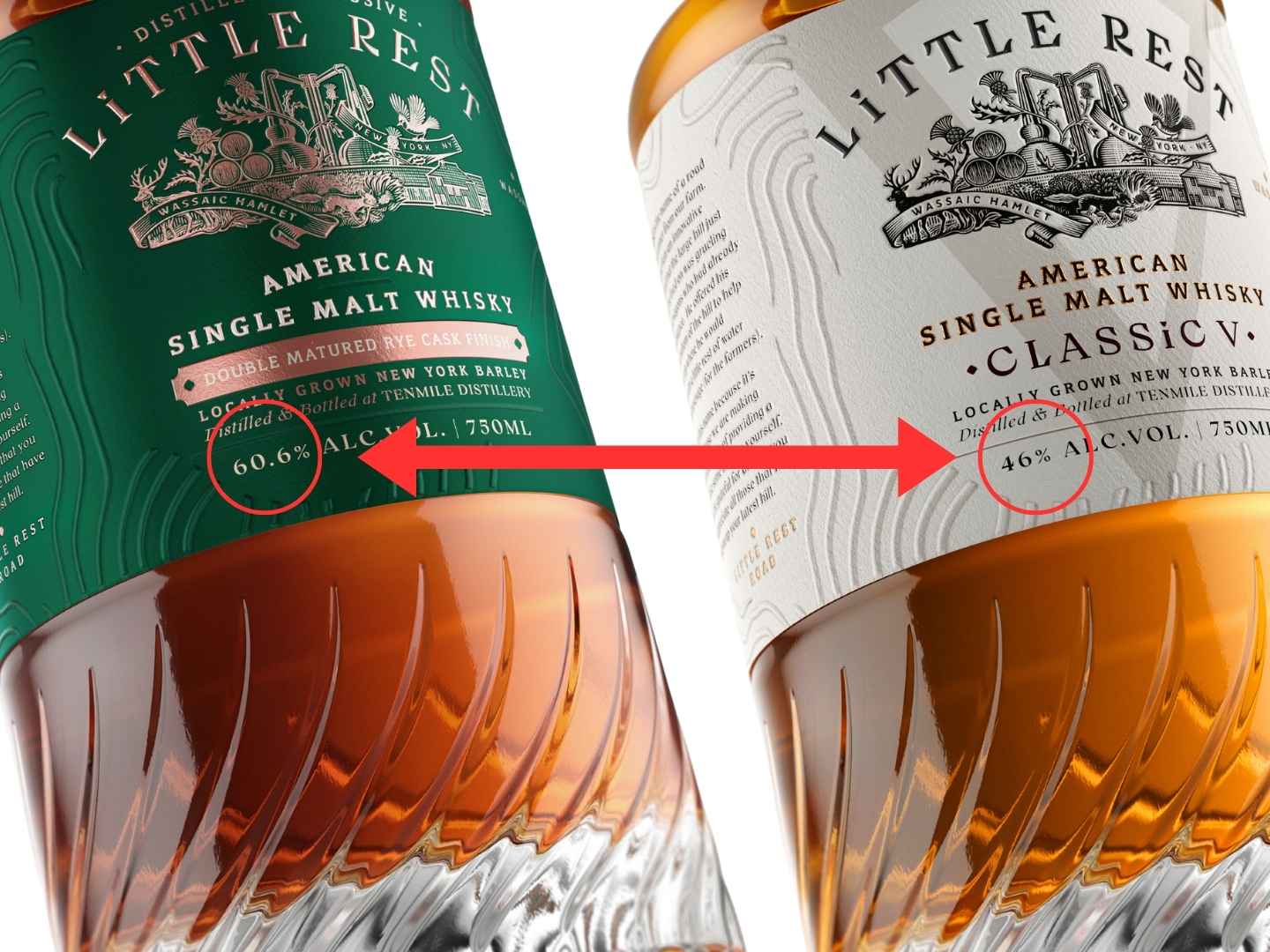
If you’ve ever browsed the shelves of a liquor store you’ve likely noticed the numbers on every bottle—80 proof, 92 proof, maybe even higher. For whisky enthusiasts and casual sippers alike, “proof” can sometimes feel like just another piece of jargon. But those numbers aren’t random. They tell a story about tradition, science, and how your spirit will taste and feel in the glass.
Let’s break it down.
What Is Proof, Exactly?
In the simplest terms, proof is a measure of alcohol strength. In the United States, proof is defined as twice the alcohol by volume (ABV).
· A whisky that is 46% ABV = 92 proof
· A vodka at 40% ABV = 80 proof
· A cask-strength whisky at 61% ABV = 122 proof
So when you look at the proof on a bottle, you’re really looking at the spirit’s alcohol content, expressed in a way that has both historical and practical significance.
A Quick History of Proof
The term “proof” dates back to 16th-century England, when spirits were taxed based on strength. To test the alcohol content, excise officers would soak gunpowder in the spirit and try to ignite it.
· If the mixture caught fire, it was considered “above proof” (strong enough to justify higher taxes).
· If it didn’t, the spirit was “under proof.”
While today’s science is far more accurate, the word “proof” stuck—and became part of distilling culture worldwide.
Proof and Flavor: Why It Matters
Proof isn’t just about numbers on a label. It influences how a spirit tastes, feels, and even how you enjoy it:
· Lower Proof (70–86) – Softer, smoother, and often more approachable for casual sipping. Flavors may feel lighter, with less heat on the palate.
· Standard Whisky Proof (86–100) – Balanced. Enough strength to carry complex flavors, but still comfortable neat or in cocktails.
· High Proof (100+) – Intense, bold, and concentrated. High-proof whiskies often reveal deeper layers of flavor when diluted slightly with water or served over ice.
How to Enjoy Spirits Across Proofs
· Sip neat: Try the spirit at bottling proof first, to experience what the distiller intended.
· Add a drop of water: Especially for higher-proof whiskeys, a splash of water can “open up” hidden flavors.
· Experiment with cocktails: Notice how proof influences balance in your favorite recipes.
Proof: More Than a Number
Next time you pick up a bottle of spirits, take a moment to check the proof. Behind that number lies centuries of tradition, a distiller’s careful choice, and a roadmap for how the spirit will greet your palate.
Proof isn’t just about strength—it’s about balance, character, and making sure every sip tells the story of where it came from.