The Revolutionary War had been going on for four exhausting years by the summer of 1779, and American morale was dangerously low. Soldiers fought without pay, often without shoes, watching friends die or desert as British forces controlled New York City and dominated the Hudson River valley. Victory seemed like a distant dream. The Continental Army desperately needed a win, and not just any victory, but something dramatic that would prove American forces could match the professional armies of Europe.
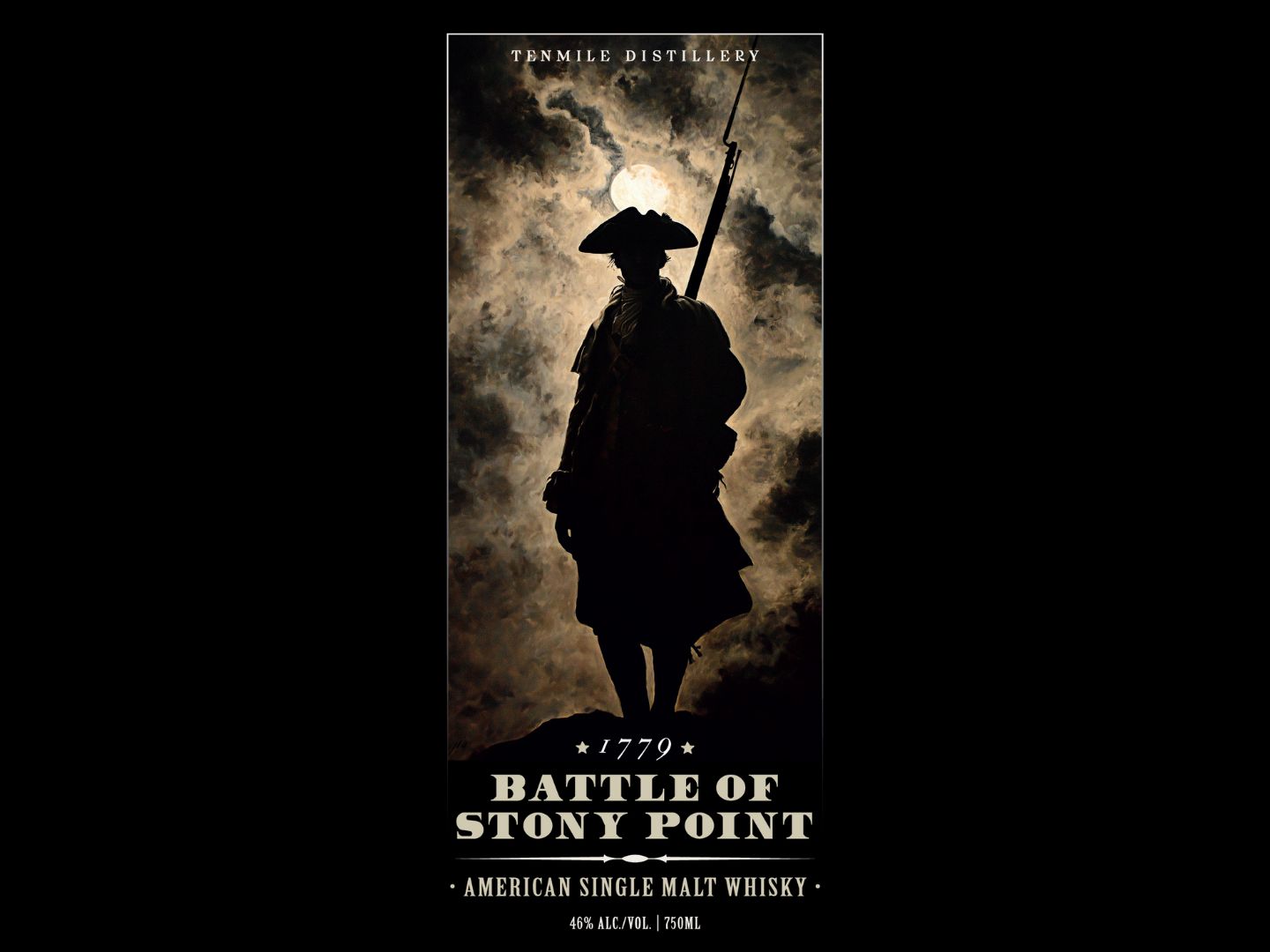
They got exactly that on the night of July 15-16, 1779, at a rocky fortress called Stony Point.
The Stronghold
The Hudson River wasn’t just another waterway; it was America’s lifeline. If the British could control it from New York City to Canada, they’d effectively slice the rebellion in half, isolating New England from the rest of the colonies. In May 1779, British forces seized two critical positions along the river: Stony Point on the western shore and Verplanck’s Point across the water. These weren’t random targets because they controlled a crucial ferry crossing and threatened American communications throughout the region.
Stony Point itself was a nightmare for attackers. It was a rocky peninsula jutting 150 feet above the Hudson, connected to the mainland by a narrow causeway that disappeared underwater at high tide. The British had fortified it with earthworks, wooden barriers, and cannons, garrisoning about 600 troops who felt thoroughly secure in their cliff-top stronghold.
George Washington faced a dilemma. He couldn’t ignore such a threatening British position, but how do you assault a fortress on a cliff without turning your army into target practice?
Enter “Mad Anthony”
Anthony Wayne was exactly the kind of officer Washington needed for an impossible mission. Born in Pennsylvania in 1745, Wayne had earned his “Mad Anthony” nickname not from insanity but from his intense, passionate approach to command. He had a legendary temper, demanded absolute perfection from his troops, and always led from the front.
But Wayne was burdened by the memory of the Paoli Massacre in September 1777, when British forces had surprised his troops at night, attacking with bayonets only. It was a devastating defeat that haunted him relentlessly. He became obsessed with bayonet training and military discipline, transforming his Corps of Light Infantry into the Continental Army’s elite special forces.
Wayne felt that the plan Washington devised must been destiny calling.
The Daring Plan
Washington spent weeks gathering intelligence, even personally climbing nearby Buckberg Mountain to observe the fort himself. The strategy he developed was revolutionary: three coordinated columns would approach under cover of darkness from different directions. The center column would create a noisy diversion, while two assault columns scaled the heights from opposite sides.
Here’s the insane part, all troops would advance with unloaded muskets, relying entirely on bayonets. No gunshots to alert the enemy, no muzzle flashes to reveal positions. Just cold steel and American determination. The weapon that had humiliated Wayne at Paoli would become his instrument of redemption.
The preparation was extraordinary. Every man had to volunteer—you couldn’t order soldiers into something this dangerous. They practiced moving silently in complete darkness, communicating with hand signals, coordinating units without voice commands. Wayne drilled his 1,350 carefully selected men relentlessly, even rehearsing the specific assault using similar terrain.
The Attack
On the night of July 15-16, Wayne’s columns began their approach. Moving over a thousand men through unfamiliar terrain in complete darkness while maintaining absolute silence required discipline and training that few armies possessed.
When Murfree’s diversionary force hit British pickets near the causeway, the night erupted with gunfire. British defenders rushed to meet what appeared to be the main attack, exactly as Wayne had planned. Meanwhile, his two assault columns were already climbing the rocky slopes on both flanks.
Colonel Butler’s right column reached the outer defenses first, swarming over earthworks in hand-to-hand combat. Simultaneously, Colonel Febiger’s left column struck the northern defenses. The British suddenly faced coordinated attacks from multiple directions—an impossible defensive situation.
During the assault, a musket ball grazed Wayne’s skull, stunning him and causing heavy bleeding. A lesser commander would have been evacuated. Not Mad Anthony. He demanded to be carried forward with his troops, shouting encouragement despite blood streaming down his face. When his men saw their wounded commander refusing to quit, they pressed forward with redoubled determination.
Victory
The fort had fallen within just twenty-five minutes of first contact. For a night assault against a fortified position, this speed was almost unheard of. American casualties were 15 killed and 83 wounded, while the British suffered 20 killed, 63 wounded, and over 400 captured.
Washington decided not to hold Stony Point permanently. This would require too many resources. American engineers systematically destroyed the fortifications and removed supplies before withdrawing. But the psychological impact was enormous and lasting.
The After-Effect
After four years of relentless war with few clear victories, Stony Point provided exactly the dramatic success Americans desperately needed. Young men rushed to join the Continental Army. European military observers, who had questioned whether Americans possessed professional military skill, got their answer. French advisors, skeptical about their American allies, were impressed by the sophisticated coordination.
The Continental Congress awarded Wayne a gold medal, only the second such honor granted during the entire war. The man surprised and routed at Paoli had executed one of the war’s most brilliant tactical victories.
Stony Point proved that with thorough preparation, innovative thinking, and committed leadership, ordinary people could achieve exceptional things. It signaled the Continental Army’s transformation from amateurs to professional military force that could match any army in the world.