
Watch the YouTube here!
For over 220 years, a fortress overlooking the Hudson River has served as America’s premier institution for creating military leaders. The United States Military Academy at West Point has produced presidents, generals, astronauts, and countless officers who’ve shaped our nation’s history. But West Point’s story isn’t just about military excellence It’s also about how a small engineering school evolved into an institution built on the American values of merit, honor, and service.
Born from Necessity
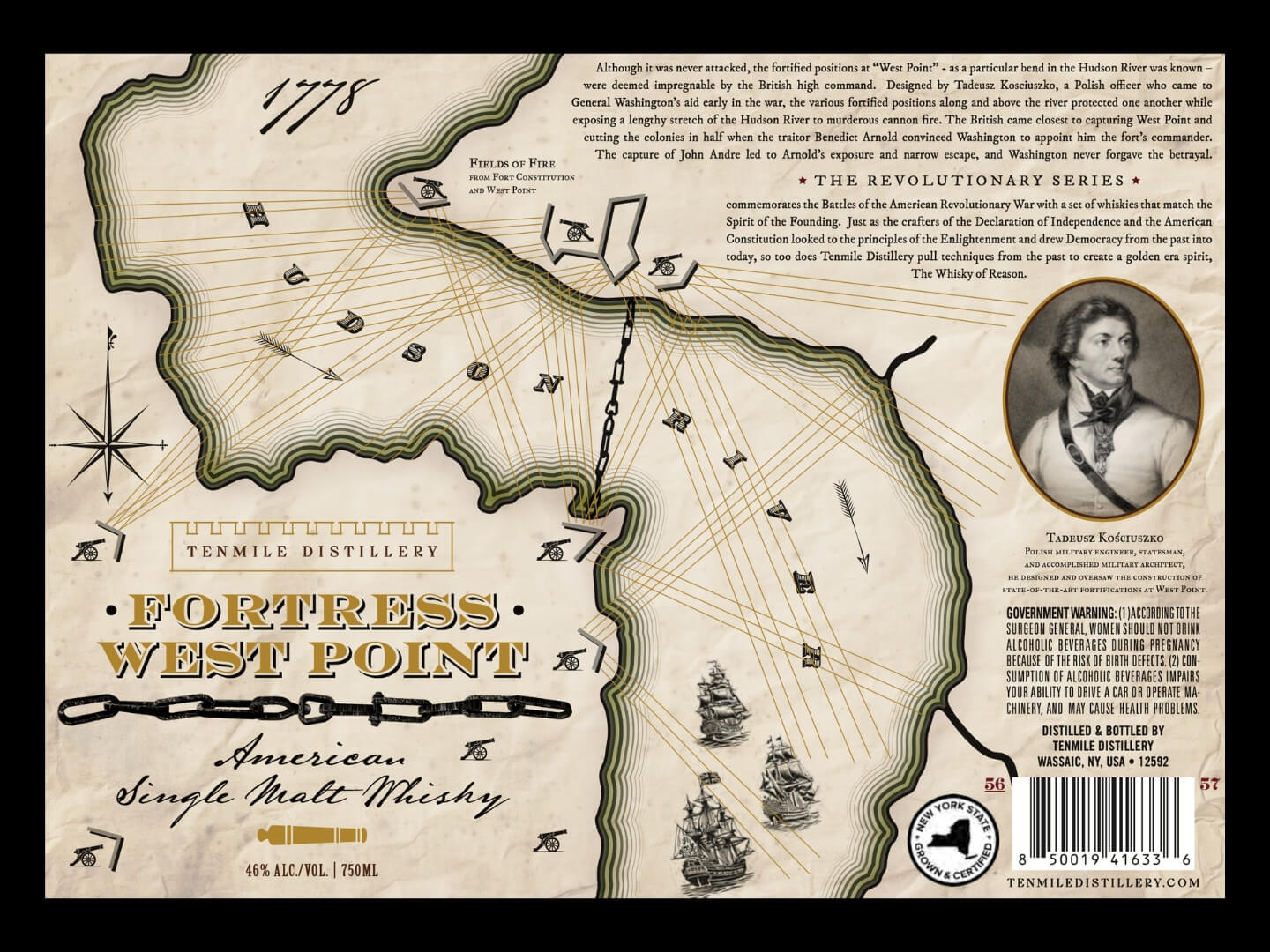
The importance of West Point preceded its academy by decades. During the Revolutionary War, this strategic position fifty miles north of New York City controlled the Hudson Highlands, which was a critical chokepoint for river traffic between the northern and southern colonies. In 1778, Polish military engineer Tadeusz Kościuszko fortified the site, stretching a massive chain across the Hudson to prevent British naval forces from dividing America into sections.
The fortification was considered so important that when Benedict Arnold attempted to surrender it to the British in 1780, it became one of history’s most infamous acts of treason. That moment shined a light on West Point’s importance. It represented not just military strategy, but American determination.
After independence was won, the young nation faced a dilemma. How could America maintain its security without the standing armies that the founders mistrusted? The answer came from an unexpected advocate: Thomas Jefferson, A man who despite his general opposition to military power, recognized the need for professionally trained military engineers.
On March 16, 1802, Jefferson signed legislation establishing the United States Military Academy at West Point. This would be America’s first engineering school. The mission was narrow but vital: train engineers to design fortifications, roads, and infrastructure for national defense.
The Father Who Made West Point Great
The academy’s early years were rough. The first class had only ten cadets, facilities were insufficient, and nobody quite knew what they were trying to create. Everything changed in 1817 when Sylvanus Thayer became superintendent.
Thayer, a West Point graduate who’d studied European military education, revolutionized the institution so thoroughly he earned the title “Father of the Military Academy.” His innovations created the foundation of modern West Point and influenced military education worldwide.
The “Thayer System” introduced rigorous daily recitations where every cadet had to demonstrate mastery. There was no hiding in the back of the classroom. He established merit-based advancement regardless of social class or political connections, a radical concept for the era. He
formalized the Honor Code that would become West Point’s moral backbone: “A cadet will not lie, cheat, steal, or tolerate those who do.”
Under Thayer’s leadership, West Point became more than a military school. It became America’s premier engineering institution. Graduates designed and built much of the nation’s early railroads, bridges, harbors, and fortifications and enabled America’s expansion into the west.
Brothers Divided
No period tested West Point more seriously than the Civil War. When the nation divided, so did the West Point family. Of the 278 graduates serving when war began, 180 stayed loyal to the Union while 98 resigned to join the Confederacy.
The result was heartbreaking: former classmates and friends commanded armies against each other. Union forces followed Ulysses S. Grant and William Tecumseh Sherman while Confederate armies were led by Robert E. Lee and Stonewall Jackson. All these battlefield commanders were West Point graduates. Battles became tragic reunions where men who’d studied together now tried to destroy each other.
West Point continued operating throughout the war, accelerating programs and expanding enrollment to meet Union demands. The post-war reconciliation was painful, requiring the institution to reintegrate Confederate veterans while honoring Union victory and achieving a delicate balance between remembering valor and acknowledging cause.
Evolution and Expansion
The late 19th and early 20th centuries changed West Point from primarily an engineering school into a comprehensive leadership institution. The curriculum expanded to include liberal arts, history, modern languages, and international relations. The Gothic Revival buildings that define West Point’s visual identity were constructed during this era, creating an atmosphere of permanence and tradition.
Douglas MacArthur’s tenure as superintendent from 1919 to 1922 proved particularly transformative. He modernized the curriculum, emphasized athletics, and began developing what he called “citizen-soldiers” who could serve effectively in both military and civilian roles.
The World Wars and the Class the Stars Fell On
World War I demonstrated West Point’s global significance. General John J. Pershing commanded American Expeditionary Forces in Europe, establishing principles of independent American military action that would influence strategy for decades.
But World War II represented the culmination of West Point’s evolution. The academy’s graduates commanded at every level of the global conflict. Dwight Eisenhower led Allied forces in Europe with strategic vision that went far beyond battlefield tactics. Douglas MacArthur
commanded in the Pacific. West Point graduates proved adept at incorporating new technologies and tactics, from airborne operations to amphibious warfare.
The Class of 1915 deserves special mention as perhaps the most distinguished in academy history. Of 164 graduates, 59 became generals, including Eisenhower and Omar Bradley. Their collective achievements exemplified West Point’s mission so thoroughly that they became known as “the class the stars fell on.”
Modern Transformations
The Cold War era brought nuclear strategy, space technology, and ideological conflict to West Point’s curriculum. But the most significant transformation came in 1976 when women were admitted for the first time. The first female cadets graduated in 1980, beginning a new era while maintaining the academy’s core mission.
Racial integration, fully realized during this period, made West Point a leader in military diversity. The academy’s commitment to merit-based advancement regardless of background became a model for both the military and broader society.
Today’s West Point graduates serve in an increasingly complex world. They lead forces in counterterrorism operations, peacekeeping missions, humanitarian interventions, and conventional conflicts. The curriculum has evolved to address cyber warfare, space operations, and new types of military activity.
The Long Gray Line
At West Point’s heart lies its unwavering commitment to character development. The Honor Code represents more than rules as it embodies the moral foundation upon which military leadership must rest. The academy’s motto, “Duty, Honor, Country,” encapsulates values that have guided American military leadership for over two centuries.
West Point’s traditions create bonds that connect graduates across generations. It is an unbroken chain stretching back to 1802 known as the Long Gray Line. From the ceremony of recognition between upperclassmen and plebes to the grandness of the graduation parade, these rituals reinforce values and create lasting connections.
The academy’s greatest achievement isn’t its impressive facilities or distinguished alumni. It’s the consistent production of leaders who exemplify the finest traditions of American military service. In an uncertain world, West Point stands as a beacon of stability, honor, and excellence, preparing each new generation to serve with the same dedication and character that has defined the institution since Jefferson signed the legislation that founded it.
The story of West Point is ultimately the story of America itself. It is a narrative of growth, adaptation, challenge, and triumph that continues with each new class taking their place in the Long Gray Line.