
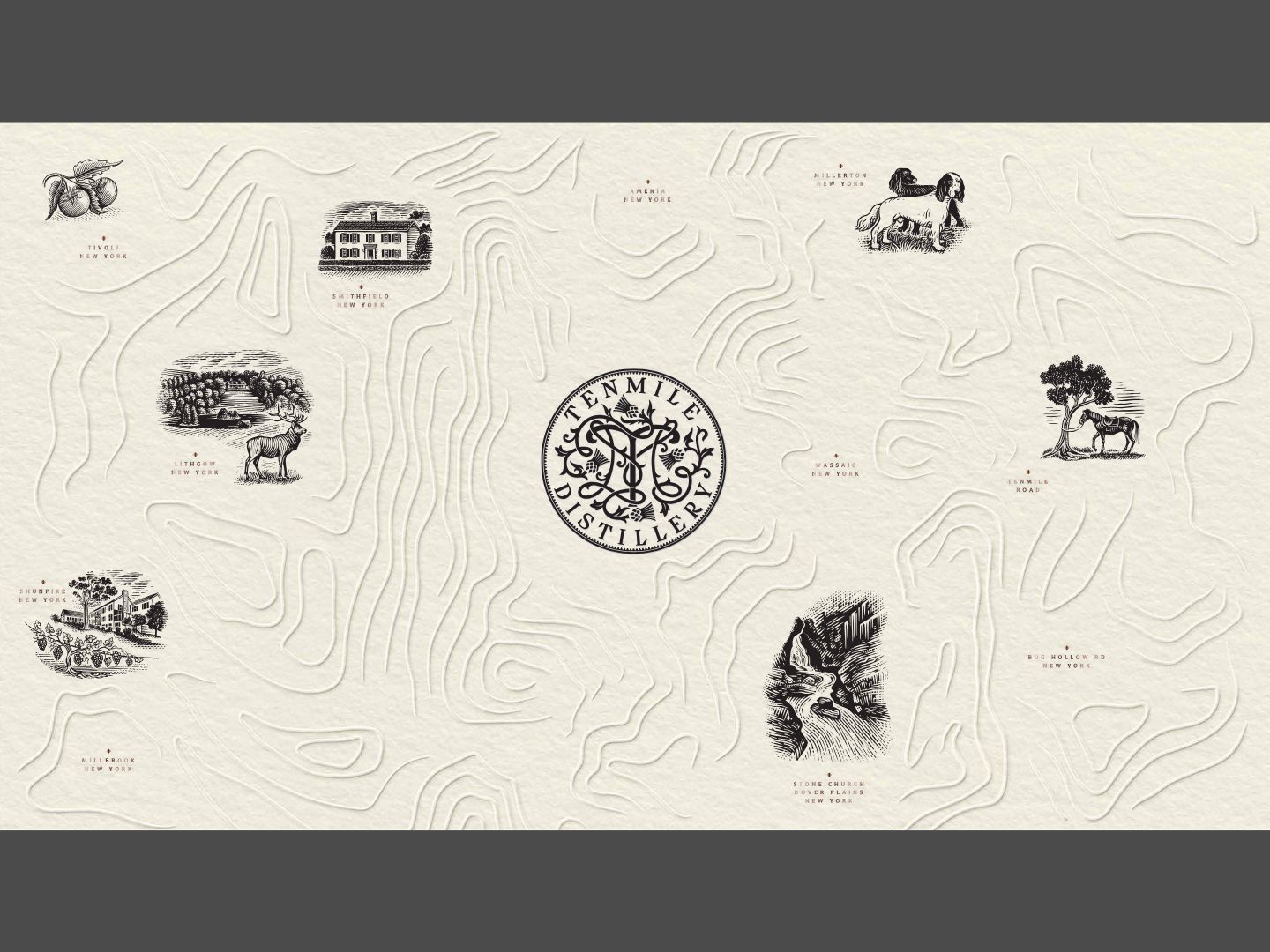
Tucked into a narrow valley in Dutchess County, Wassaic, New York, is a small hamlet with a big story. Shaped by mills, iron, and later the arts, Wassaic has always been a place where people take what the land and community give them and turn it into something lasting. Today, that legacy continues with Tenmile Distillery, which has become part of the village’s new chapter of creativity and craftsmanship.
Early Roots: Mills on the Creek
The name “Wassaic” comes from the Algonquian was-sick, meaning land of difficult access. True enough—the hamlet is tucked into a steep valley carved by Wassaic Creek. But while access was tricky, the creek itself made life possible. By the mid-18th century, settlers had built gristmills and sawmills, using the rushing water to power the growth of a small farming community.
Industry and Iron
In the early 1800s, Wassaic became part of the Hudson Valley’s iron belt. Local deposits of ore, combined with timber for charcoal and water power, fueled iron furnaces and forges. For decades, Wassaic was a working industrial town, where the ring of hammer and anvil filled the valley.
The Textile Era
As the iron industry declined, Wassaic shifted to textile production. The massive Wassaic Mills complex, with its tall brick buildings, became the heartbeat of the town. Powered first by water and later by steam, the mills produced wool and cotton goods that were shipped out via the Harlem Valley Railroad, which reached Wassaic in 1852.
For generations, the rhythm of life here was defined by the mills: the whistle in the morning, the hum of looms throughout the day, and the trains carrying workers and goods to and from the hamlet.
Decline and Rediscovery
Like many mill towns, Wassaic felt the sting of industrial decline in the 20th century. The textile industry moved on, leaving the great mill buildings empty. The railroad shrank back to a commuter line, and Wassaic settled into quieter years.
But the bones of history—the creek, the valley, and the red-brick architecture—remained. Those enduring features would become the foundation for a new kind of renaissance.
The Wassaic Project and a Creative Renaissance
In the early 2000s, artists discovered the beauty and potential of Wassaic’s abandoned mill buildings. They launched the Wassaic Project, an arts residency and exhibition program that quickly gained national recognition. Each summer, their festival fills the hamlet with music, installations, and energy.
Wassaic, once a town of industrial production, became a town of cultural creation—a place where history and imagination converge.
Tenmile Distillery: A New Chapter in an Old Valley
Into this setting came Tenmile Distillery, set against the same hillsides and drawing on the same spirit of craft that built Wassaic’s history. Where 19th-century workers once milled grain for flour or spun it into textiles, Tenmile now mills grain for whisky.
The parallels are striking:
- Water power to craftsmanship – Wassaic Creek once turned mill wheels; today, its pristine valley environment inspires the pure water and natural surroundings that go into distilling.
- Grain as a constant – From gristmills to whisky mash, grain has always been the foundation of Wassaic’s economy and culture.
- Community hub – Just as the mills once anchored the town’s daily life, Tenmile’s distillery, bar and restaurant have become a gathering place, welcoming visitors to experience both history and hospitality.
Tenmile’s work embodies the same values that built Wassaic centuries ago: precision, patience, and pride in turning raw materials into something remarkable.
Wassaic Today
Walk through Wassaic now, and you’ll see history alive in new ways. The mill buildings house artists. The train still runs, carrying weekend visitors from New York City. And at Tenmile Distillery, copper stills shine where old industry once stood, carrying forward the hamlet’s story of transformation.
Wassaic has never been just one thing. It has been a mill town, an ironworks hub, a textile center, an arts destination—and now, a home for world-class whisky. Each chapter builds on the last, reminding us that while industries may change, the spirit of making and creating endures.