Watch the Youtube here!
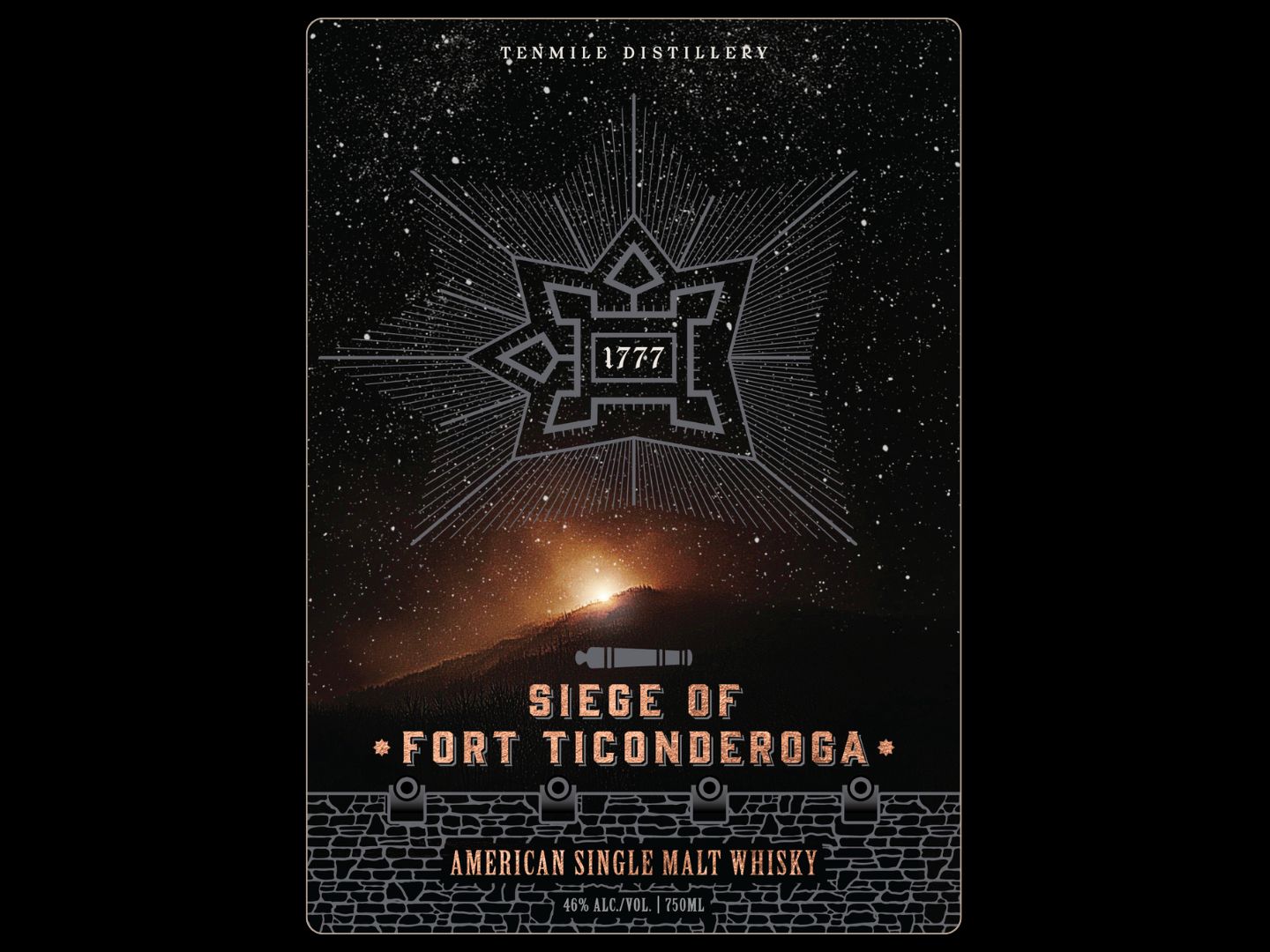
In all of military history, few defeats are as dramatic as the fall of Fort Ticonderoga in July 1777. This star-shaped fortress fell to British forces without a single shot being fired in its defense. The story of how tactical innovation defeated stone walls to offer valuable lessons about the dangers of conventional thinking and the limits of military success without strategic vision.
The Prize
By summer 1777, the British had developed an ambitious plan to crush the American rebellion once and for all. General John Burgoyne would advance south from Canada down Lake Champlain, while coordinated forces moved from other directions to converge near Albany. The objective was straightforward: split New England from the southern colonies and defeat the rebellion piece by piece.
Fort Ticonderoga stood squarely in the path of this grand strategy. Located at the southern tip of Lake Champlain, the fortress controlled the water route between Canada and the Hudson River Valley. Whoever controlled Ticonderoga controlled the gateway to the American heartland.
The fort’s reputation was formidable. Just two years earlier, Ethan Allen and Benedict Arnold had seized it from the British in a daring dawn raid that became one of the Revolution’s first victories. Since then, the Americans had spent two years strengthening the position with earthworks and stockades, adding to its already impressive stone walls and multiple bastions. The 3,000-man garrison under Major General Arthur St. Clair, a Scottish-born veteran, prepared to defend what many considered an impregnable position.
“Gentleman Johnny”
As “Gentleman Johnny” Burgoyne approached in early July with nearly 8,000 troops, St. Clair faced a growing problem. His garrison was too small to properly man the extensive fortifications, and supplies were running dangerously low. But the fort’s geography seemed to offer natural advantages.
Fort Ticonderoga was surrounded by high ground: Mount Hope to the northwest, Mount Independence across the lake to the east, and Sugar Loaf Hill to the southwest. The Americans had fortified Mount Independence and connected it to the main fort with a bridge of boats. They held Mount Hope with a smaller fortification.
But Sugar Loaf Hill represented their fatal blind spot.
The Miscalculation
Standing 750 feet above the lake, Sugar Loaf Hill dominated the entire Ticonderoga position. American engineers had surveyed it years earlier and dismissed it with confident certainty, stating the hill was too steep and rocky for artillery. “Where a goat can go, a man can go,” they reasoned, “and where a man can go, he can drag a gun.” The implication was clear that this was impossible, therefore not worth worrying about.
It proved to be a terrible miscalculation.
On July 2nd, Burgoyne’s forces began their systematic encirclement of the fort. British light infantry seized Mount Hope, cutting off escape routes. German troops under Baron von Riedesel moved to block the road south. The decisive blow came from an unexpected source.
Lieutenant William Twiss of the Royal Engineers had been studying Sugar Loaf Hill through his telescope with fresh eyes. Unlike his American counterparts, he saw opportunity where others saw impossibility. The hill could be fortified, and once British guns crowned its summit, Fort Ticonderoga would become completely untenable.
The Impossible Made Possible
On July 4th, while Americans inside the fort marked their young nation’s first anniversary, Burgoyne ordered his men to begin the seemingly impossible task. Working through the night, British and German soldiers cut a zigzag path up the rocky slope, dragging 12-pound cannons and howitzers to positions that the Americans had deemed unreachable.
The morning of July 5th brought devastating revelation. As American sentries scanned the surrounding hills through the early morning mist, one spotted something that sent shockwaves through the garrison. It was the distinctive outline of cannon barrels against the sky on Sugar Loaf Hill.
Officers rushed to the walls with telescopes, confirming their worst fears. British artillery now occupied every inch of Fort Ticonderoga. The guns could rake the courtyard, destroy the barracks, and make life impossible for the garrison. The great fortress had been rendered useless by a feat of military engineering that conventional wisdom had declared impossible.
A Desperate Gamble
St. Clair called an immediate council of war. The situation was hopeless and his undermanned garrison could neither assault Sugar Loaf Hill nor withstand bombardment from those heights. But there remained one option. He could evacuate under cover of darkness and preserve the army to fight another day.
As night fell on July 5th, one of the most daring evacuations in military history began. St. Clair had to move 3,000 men, their equipment, and supplies across the lake and south toward Hubbardton, all while maintaining complete silence. The main force would cross to Mount Independence and march south overland, while the sick, wounded, and valuable supplies would be loaded onto boats and sent down the lake toward Skenesborough.
The operation nearly came to an end when a house in the fort accidentally caught fire, illuminating the entire scene. British guards called out challenges, but quick-thinking Americans convinced them it was just an accidental blaze. Remarkably, the evacuation continued undetected.
By dawn on July 6th, Fort Ticonderoga stood nearly empty. St. Clair had successfully evacuated his entire garrison without losing a single man to enemy action during the withdrawal itself. The mighty fortress had fallen without a shot fired whick was a remarkable achievement in military logistics, even if the strategic loss was terrible.
The Victory
As British troops cautiously entered the abandoned fortress, they could hardly believe their fortune. Burgoyne immediately dispatched pursuit forces that would catch and maul the retreating Americans at Hubbardton and Skenesborough. Hundreds were killed or captured, and virtually all supplies were lost.
News of Ticonderoga’s fall sent shockwaves throughout America. Many blamed St. Clair, accusing him of cowardice or even treason, though he would later be court-martialed and cleared. British newspapers proclaimed Burgoyne the hero of the hour, and even George Washington admitted the loss was a serious blow.
Yet Burgoyne’s very success contained the seeds of his eventual downfall. The easy victory at Ticonderoga made him overconfident, leading him to push deeper into the American wilderness without adequate supplies or communication with other British forces. The tactical brilliance that won Ticonderoga would soon be overshadowed by bad decisions culminating in disaster at Saratoga just three months later.
The siege of Fort Ticonderoga demonstrates how tactical innovation can overcome seemingly impossible odds. It also reveals the limits of tactical success without broader strategic vision. Lieutenant Twiss’s recognition that Sugar Loaf Hill could be fortified changed the entire course of the 1777 campaign. But winning a battle, as Burgoyne would discover, can sometimes be the first step toward losing a war.
The fortress that fell without a shot remains a powerful reminder that yesterday’s certainties can become tomorrow’s catastrophic miscalculations, and that no position is beyond capture.