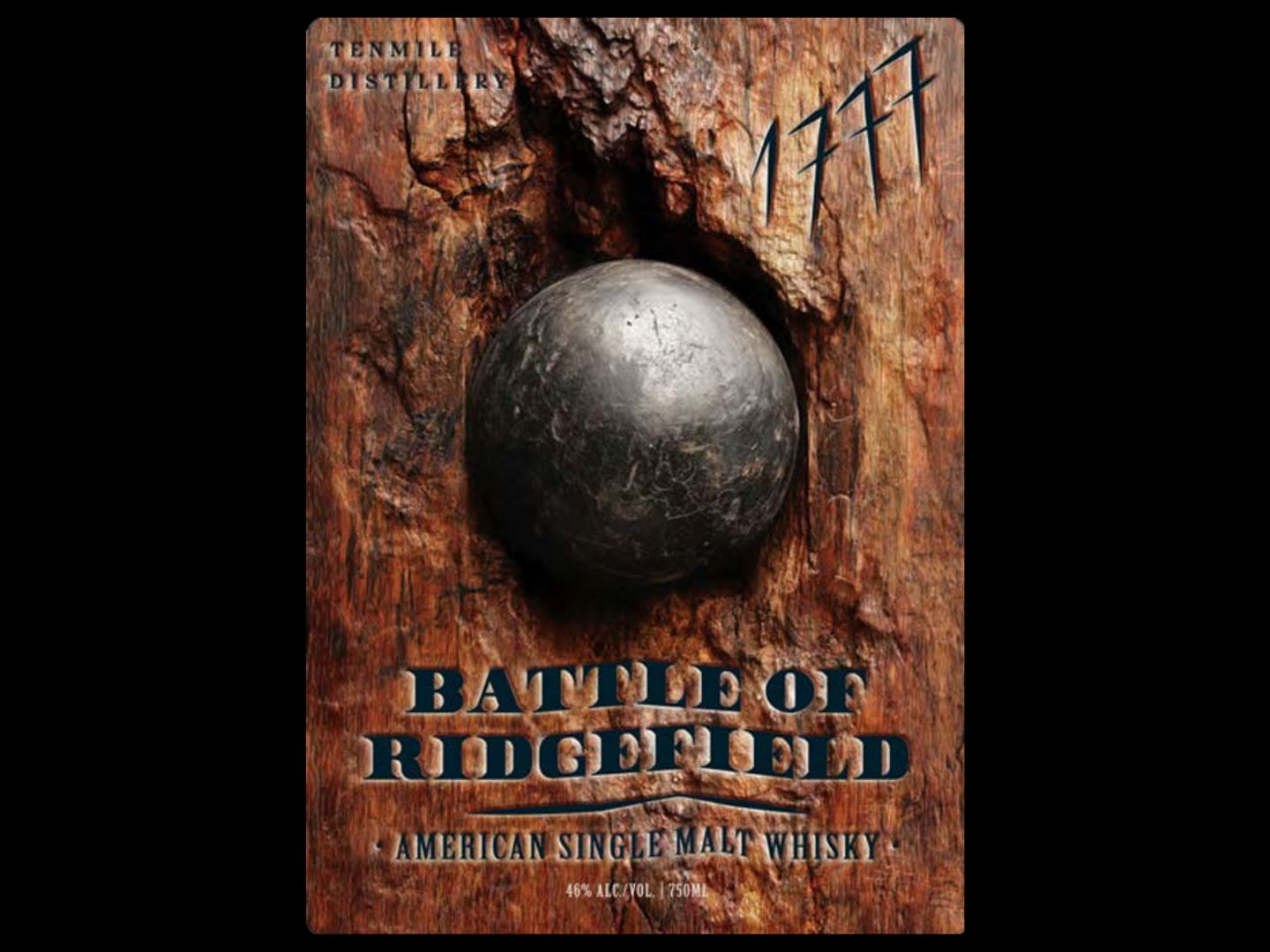
By spring 1777, the Revolutionary War had been going for nearly three years, and the British were getting frustrated. Sure, they could win battles when they met American forces head-on, but controlling this massive country was proving impossible. So they came up with a new plan: instead of trying to hold territory, they’d just destroy American supplies and make it harder for Washington’s army to function. Sounds simple enough, right? Well, the people of Connecticut were about to teach them why nothing about this war would be simple.
The Raid
Connecticut had become a crucial supply hub for the Continental Army, with warehouses in Danbury packed full of everything from beef and pork to shoes, tents, and gunpowder. On April 25th, 1777, British Major General William Tryon landed at Compo Beach with 1,800 British and Hessian troops. The mission seemed straightforward: march to Danbury, burn the supplies, and get back to the ships before anyone could organize a response.
What the British kept underestimating was how quickly Americans could mobilize. As soon as Tryon’s forces started marching inland, church bells started ringing across the countryside. Riders galloped from town to town with warnings. By the time the British reached Danbury on April 26th and started their bonfire, American forces were already gathering like angry bees whose hive had just been kicked.
Leading the American response was 67-year-old Brigadier General David Wooster, a veteran who’d fought in the French and Indian War decades earlier. Wooster wasn’t about to let these redcoats stroll back to their ships after burning American supplies.
A General’s Last Stand
On the morning of April 27th, as smoke still rose from Danbury’s burning warehouses, Tryon began his retreat toward the coast. He knew the clock was ticking and every hour meant more militia converging on his route. The first serious resistance came as they left Danbury. General Wooster, with about 200 men, started harassing the British rear guard through the village of Bethel.
Then Wooster did something that was either incredibly brave or incredibly reckless. Seeing a chance to hit the British column hard, he spurred his horse forward and shouted to his men: “Come on, my boys! Never mind such random shots!” But a British musket ball found its mark, mortally wounding the aging general. His last words, according to witnesses, were: “I am dying, but with a strong hope and persuasion that my country will gain her independence.”
Wooster’s death sent shockwaves through the American ranks, but it also lit a fire under them. Nobody was letting the British walk away after that.
The Trap
Command fell to Brigadier General Gold Selleck Silliman, who quickly realized that the town of Ridgefield offered the perfect spot to make a stand. The town sits on high ground with narrow roads flanked by stone walls and was basically perfect defensive terrain. Silliman positioned his roughly 500 men along Main Street, using houses and walls as cover. They built a barricade across the road using carts, logs, and anything else they could find.
Around 1 PM, when the British advance guard crested the hill approaching Ridgefield, they saw not an open road but a wall of determined Americans blocking their path. General Tryon had a choice: attack head-on or waste precious time trying to go around. With his men exhausted and more Americans arriving by the hour, he chose to attack directly.
The British formed up in their traditional battle lines including red-coated regulars with fixed bayonets supported by Hessian troops. It was an impressive, intimidating sight designed to make opponents break and run. But these weren’t European peasants facing them. These were American farmers and shopkeepers fighting for their homes and families, and they weren’t going anywhere.
The Shooting Started
The British advanced to the sound of drums and fifes. When they reached musket range, both sides opened fire simultaneously. The crash of muskets echoed off the surrounding hills as white smoke began to blanket the battlefield.
What happened next defied everything the British had learned about warfare. Instead of breaking under the disciplined volley fire of professional soldiers, the Americans held their ground. They used every advantage the terrain offered including firing from behind stone walls, ducking into houses, then popping out to fire again. The British found themselves in a nightmare scenario where every house potentially hid enemies and every stone wall became a fortress. This wasn’t the open-field warfare they’d trained for.
Captain Joseph Platt Cooke and his men held the barricade in the center of town for nearly an hour under intense fire. British attempts to charge with bayonets were met with devastating close-range volleys. Bodies piled up on both sides of the barricade.
Eventually, weight of numbers started to turn the tide. The British brought up their light artillery and began systematically destroying the barricade. Worse, Hessian troops found a way around the American left flank, threatening to surround the defenders. Silliman gave the order to withdraw, but this wasn’t a panicked retreat. It was a fighting withdrawal, making the British pay for every yard of ground.
The Nightmare March
What followed was unlike anything the British had experienced in European warfare. As they resumed their march toward Compo Beach and their ships, they found themselves under constant attack. American militia would emerge from forests and farms, fire deadly volleys, then disappear before the British could respond. It was guerrilla warfare at its most effective and most frustrating.
The British had technically won at Ridgefield and broken through the American position and continued their retreat. But at what cost? Their casualties mounted with each passing mile. Men fell to sniper fire from behind trees and rocks. The psychological toll was even worse because they never knew where the next attack would come from.
One British officer later wrote: “The rebels did not, as formerly, wait for us in bodies to be defeated, but in small parties waylaid the roads, and though driven off, immediately appeared in our rear.” Translation: these Americans weren’t fighting fair, and it was driving them crazy.
The Aftermath
By the time Tryon’s battered force reached their ships, they had accomplished their mission of destroying supplies in Danbury. But the larger picture told a different story. The Americans had lost about 20 killed and 40 wounded, while British casualties were estimated between 60 and 150 which was a heavy price for what was supposed to be a simple raid.
More importantly, the battle demonstrated something important: the British could no longer move freely through Connecticut. The speed and effectiveness of militia mobilization, combined with the tactical evolution from formal battle lines to guerrilla warfare, showed a maturation of American military thinking.
News of Wooster’s heroic death and the resistance at Ridgefield spread throughout the colonies, providing a much-needed morale boost. It showed that British regulars could be stopped by determined Americans fighting on their home ground. For the British, it highlighted the fundamental problem with their strategy. They could win individual battles, but they couldn’t hold territory or break the American’s resolve.
The farmers and shopkeepers who stood behind that barricade on Main Street weren’t just fighting for independence. They were defining a distinctly American way of war that emphasized mobility, local knowledge, and sheer determination over formal military doctrine. And that approach would be impossible for the British to defeat.